Digital Dumbness

In modern time, it would be unusual if in a high school classroom, not every student had a phone.  Our phones allow us to do many useless things like play candy crush and minecraft, but they do allow us to do some things like having access to the internet that help us in day to day life.  Giving us access to google, wikipedia, and countless articles, it’s easy to get lost in the vast sea of knowledge. Although google is convenient, it is hurting the minds of thousands in was that people don’t even notice.  Reducing our memory, debilitating our ability to read and find information, and destroying the need for human interaction and teacher are three ways that the googlization of knowledge is having a negative affect.

If memory loss is desirable, using google to find information is recommended.  In a study conducted in 2011 by the journal Science, the results showed that, “when people know that they have future access to information, they tend to have a better memory of how and where to find it – instead of recalling the information.”  This means that science has been able to prove that using google makes you less inclined to remember the information. Remembering information was a vital skill to people in a world before technology, but nowadays the ability to learn information is declining. In one article it says that there are two trillion google searches every year as of 2016 (Google Now Handles at Least 2 Trillion Searches per Year, Sullivan). In 1999 that number was only one billion . That means searches have increased by two thousand a year.  When you actually learn something, you gain knowledge on a subject, but when you use google, you gain knowledge on the way to find information, which for us is simply googling it.

If you’ve ever written a blog you know that you should never write long blocks of text.  Maybe it’s because long lengths of text look confusing, but maybe it is because we can no longer absorb information.  We are so used to quickly skimming the first articles google sends to the screen for us, so we can find the answer fast.  In an article by Nicholas Carr called “Is Google Making us Stupid”, he quotes Friedman, a pathologist from the university of Michigan who said, “thinking has taken on a staccato quality”.  He calls is staccato because he, and many other, loose train of thought when reading long texts, turning it into broken fragments of words.  Even going as far as to say that more than three or four paragraphs has become too much to absorb and analyze. This struggle to comprehend comes from our usage of google.  According to one article on seo tribunal, “google receives over 63,000 searches per second”(63 Fascinating Google Search Statistics, Aleksandra).  Using google makes the answer pop right up before you even click on an article, so when we go to read we get bored, wanting the answer to be right at the top.  To solve our boredom, a quick scan of the text is often sufficient for us. This can be harmful because you miss details. When we skim through a text to find what we are looking for we may miss important things that are needed to fully understand or form an opinion.  Aside from lack of details, using google may make reading long books, articles, or information a lost art.

Going to school is often complained about, but most friends are made at school.  Schools teach kids how to interact with people like classmates and teachers, a vital part of our lives.  Although schools are so important for social skills, classrooms are easily being traded in for mass open online courses, MOOCs.  MOOCs are free online classes available for anyone to enroll in, all there is to do is hop to google and sign up on a website. Although a convenient choice, turning to a MOOC removes the needs for human interaction within classes.  In one article it says, “MOOC style of education will gradually kill care, empathy, and respect involved between students and teachers in a physical classroom,’’(Ignite Engineers). In a world gone digital, another way to avoid socialization is the last thing needed.  Not interacting with people removes purpose and emotion from learning. Google has replaced a room full of students holding you accountable with a digital teacher who will never know your name. This concept reduces motivation to complete assignments and complete courses.  MOOC learning is just one way teachers and classrooms are being replaced; one day school won’t be needed because everything you need to know can be found on google.

People using google

Some people might argue that google has only benefited society.  Claims like it has made knowledge accessible and that it is good for people with social anxiety are easily refuted.  Although google has made knowledge available at our fingertips, information has always accessible through teachers and books.  The only difference is now it is portable, but in the end it is better to read and talk to people as I talked about in my previous paragraphs.  People with social anxiety may look at MOOCs as a way to skip the classroom, but isolating yourself from the world is never a good idea. Going to schools and campuses may has been found to help people with social anxiety.  Celeste Conlon from the national social anxiety center writes in an article called “Social Anxiety and School Refusal” that, “excessive absences can lead to long-term academic failure, social isolation, conflict at home, school dropouts, and even occupational problems and marital problems in adulthood”.  Social anxiety patients need to attend schools, it can be very helpful. Although google can be positive, overall it has a negative effect.

Turning to google for everything is having a negative effect on the world.  Using google shrinks memory capability, reduces ability to read and analyze, and is killing the culture in schools.  The internet is often viewed as a brilliant thing, but what is the cost of brilliance? In a world where everyone has a cellphone or laptop, we need to remember the importance of basic skills like reading, remembering, and socializing.  

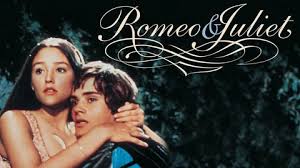
Romeo And Juliet: The Start

If you were to ask high school graduates what books they read throughout high school, the majority would say that they have read Romeo and Juliet.  The classic play is read by almost everyone, and I have recently started to read it as well.  After the first act, I have some first impressions. So far, I think that the play is fascinating.  When you know the two main character will die, I constantly am wondering when it will go wrong. The anticipation is insane!    I also have gotten a very strong impression that Tybalt will get in the way of the couple, but when he realises how in love they are he may change.  I think other characters like the Nurse or Juliet’s mom might be in support of the relationship as much as they can. I have a lot of good feelings about the play so far.

On the downside, I also have some negative firsts impressions.  Aside from the obvious language gap, not all of the play makes complete sense to me.  I struggled in a couple of scenes to understand what the plot was. One scene I really had a hard time grasping was the towards the beginning when the people are fighting in the street.  I never completely understood who they were or why they were fighting. Another thing that falls short for me would be where the rivalry began. Aside from those struggles, I have had a good first impression of the book.

In the play, love at first sight has a major impact on Romeo and Juliet, but does it really exist?  When Romeo first sees Juliet, he says, “O she doth teach the torches to burn bright. / It seems she hangs upon the cheek of night / As a rich jewel in an Ethiope’s ear.” (1,4, 42-44) .  He instantly thinks that she is the most gorgeous person he has ever seen, and he takes that for love. The issue with that is, can you really love someone if you have never talked to them?  Easily the answer is no, but to Romeo, the answer is easily yes. So far the story has been driven by the idea of love at first sight. As we know, Romeo attends the party because he was in love with Rosaline. That is the first time that love really moves along the plot line, but love at first sight doesn’t happen until the party.  At the party, Romeo sees Juliet and is instantly in love. That leads to him pursuing her later that night, and eventually setting up for the second act. I think that love at first sight is os important because if they had not gone straight for love, the relationship might not have worked. They might have been interrupted by the family feud if the instantaneous love had not occurred.  So far, love has had a major impact on the play, and I wonder what else it will impact moving forward.

In the first act, I actually focused on Romeo and his need for love.  Things that become obvious when you read that Romeo is dependant on love.  He loves Rosaline, and the second he is rejected he loves Juliet. He constantly needs someone to love and obsess over.  In the first act scene four, he says, “Under love’s heavy burden do I sink,”. That quote means that Romeo is in love so constantly that it has become a chore.  He loves Juliet so much he can not make a decision without thinking about her, she controls his life, and it’s tiring. Even though it is tiring, he can not help himself because you can not control true love.  That is really important to understanding the play because when Romeo acts what seem impulsively, we know that he is thinking. He thinks about how it will affect Juliet, and what happens to Juliet affects him.  When someone is so wildly in love that they feel constantly reminded of it, what they will do is insane. Moving on, I want to know, what crazy actions will lead them to their death beds?

In the two movies, Zeffirelli and Luhrmann take two very different approaches to the classic tale of Romeo and Juliet.  For starters, the staging is very contradicting. In Zeffirelli’s version, the characters are dressed in Elizabethan time period clothes and attend the ball in a castle from Elizabethan time.  On the other hand Luhrmann has his characters in costumes in a much more modern castle. Also, when Romeo and Juliet first see each other is different. In the Zeffirelli version, Romeo first sees Juliet, and she notices him later.  Contrary to that in Luhrmann’s movie Romeo and Juliet see each other through an aquarium at the same time. The staging of the two movies also is not the same. The Luhrmann version has Romeo drop his mask before seeing Juliet, and has someone singing live in the background.  Unlike Luhrmann, Zeffirelli’s character Romeo has his mask on for the beginning of the scene, and it revolves around the instrumental music they are all dancing too. As far as character development goes, the two interpretations fall far apart. Zeffirelli has his characters seeming more proper and has Tybalt just slightly watching over.  In his version the Juliet seems shy, but in Luhrmann’s movie Juliet is more open to Romeo. The characters from Luhrmann seem more relaxed and casual with each other. Overall the two takes on Romeo and Juliet have a lot of differences.

Despite their differences, Luhrmann and Zeffirelli do have similarities in the movies.  For starters, they both have some things in their staging. Both Luhrmann and Zeffirelli have their characters in the Capulet castle at a masquerade ball.  They also both include lots of dancing and music. In the staging section, both of them have very few props, and the music increases when the kiss happens. When you look at character development, they both follow similar timelines.  First they see each other, then they dance, then they kiss. They also both have Romeo going in for a kiss a time before Juliet allows him to kiss her. Though very different, the movies have obvious similarities.

love gif link

Connections to Love

Love is Impulsive

Maybe I have never been in love, but I have acted like I was. People in love are often said to be crazy in love, but me, I am just said to be crazy. You are said to be crazy when you act impulsively. You make spr of the moment decisions and never look back because you are in love, and love is impulsive. I might not be in love but I fit love’s crazy status. When making a decision I am likely to do something spur of the moment a not look back.

You can’t just flip a coin.

When it comes to making important decisions, people will say you can’t just flip a coin, but can you. If you are asking me, flipping a coin is a good way to make a choice. Last year, I had to decide which school I wanted to go to. My choices were PV, where I attended at the time and currently attend, or go to the private school Gwynedd Mercy, the school that my sister goes to. I couldn’t choose.

Image result for flipping a coin

Days before I had to have a final answer, I had no clue what I wanted to do. My best friend, sisters, and I were eating dinner together when my parents told me that I needed to give them my answer that night. I had been putting off making the choice and even thinking about it. With no idea what I wanted to do, I did what any logical person would’ve. I flipped a coin. I had trust in luck of the draw, and the coin said to go to PV. I went with what the coin said, and I am very happy about it.

To this day whenever I need to make a choice, my family mocks me saying just flip a coin. They thought I was insane and too dumbly impulsive, but I think I was doing the best thing. People in love feel the same way. What we see as stupid or not worth it may be the thing that makes the most sense to them. Sometimes being impulsive is what we all need.

Blog Post Reflection

10/23

Over the past month or so,  I have been reading the book Theodore Boone: The Abduction.  After reading a write a blog post, which you can read under my independent reading section.  Recently I have had my peers read my blog and make comments and suggestions, and I have read theirs.  I have participated and peer edits before, but I have not found them useful.  This one however, was super helpful, and helped me to find a lot of my mistakes.  My classmates helped me to realise grammar mistakes, spelling mistakes, and gave me feedback on my blogs appearance.  I had forgotten to upload a typed post, thankfully they realised it wasn’t there!  Not only was their feedback pleasantly helpful, but I enjoyed reading their blogs.  I read a blog by my friend Lucio which is linked here, and I really liked the way he used descriptive language, metaphors, and quotes.  There is no doubt I will copy him in my own blogs!  This was a truly positive experience for me.